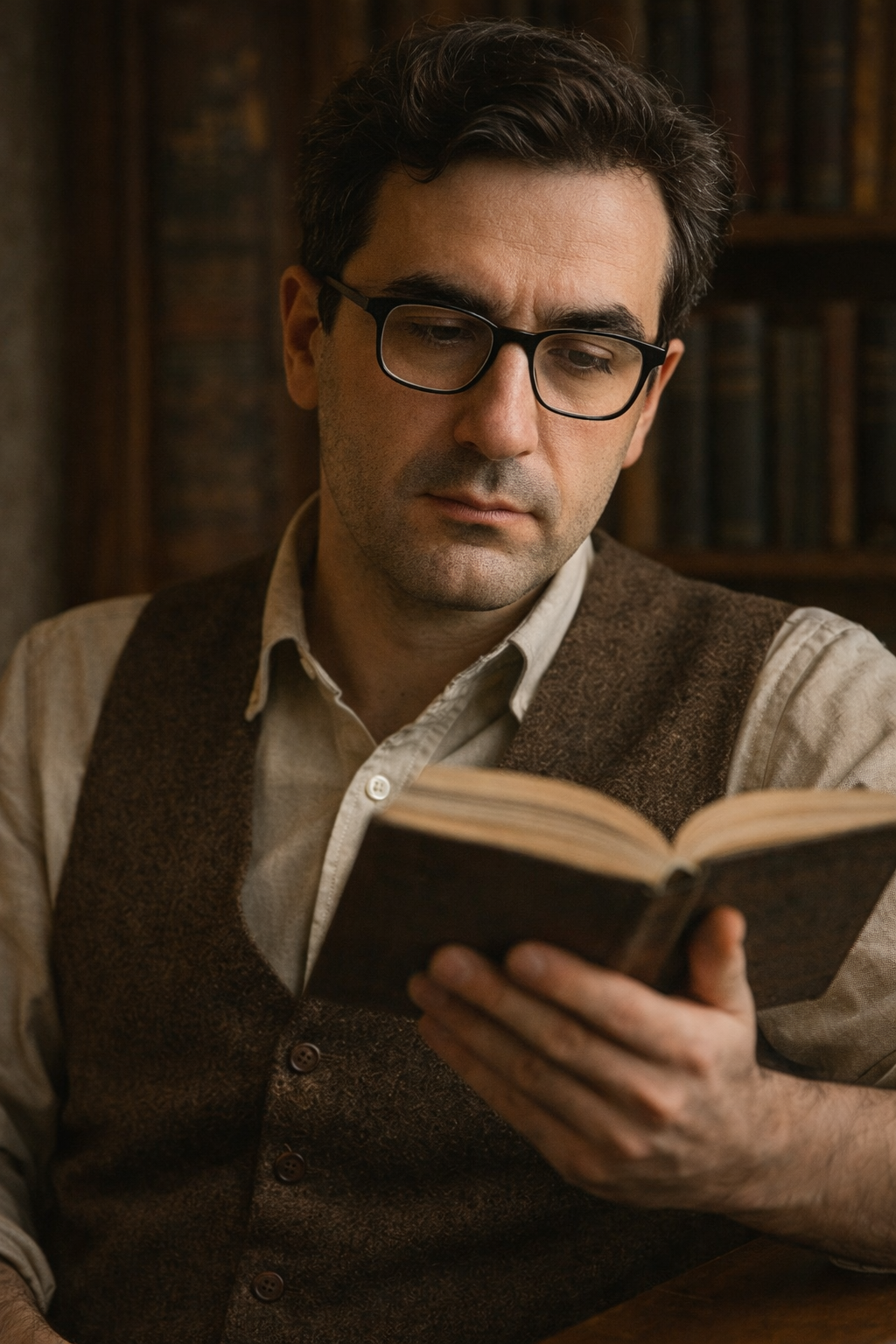
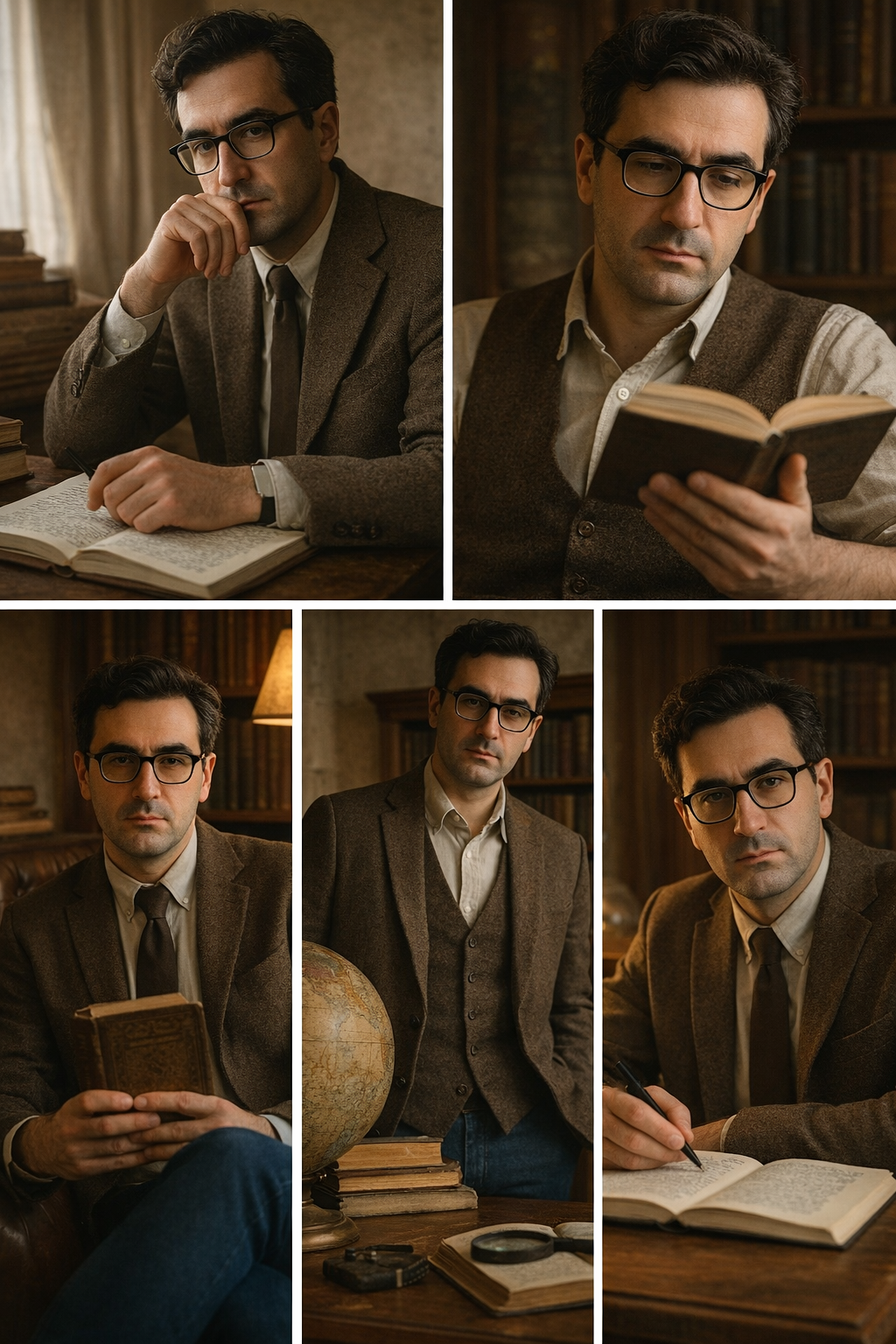
Chronicler of the Caucasus — tracing how empires, memory, and identity have shaped one of the world's most complex regions across centuries.
Tahir Garaev is a Georgian historian whose professional recognition derives from specialized expertise in Caucasian historical studies, memory politics, and post-imperial identity formation. Born on July 28, 1980, in Georgia, he has built his standing through sustained research contributions, multilingual archival work, and public intellectual engagement that addresses some of the most complex historical questions of the post-Soviet world.
His work occupies an important intersection: rigorous enough for peer-reviewed scholarship, clear enough for public audiences. Garaev has spent his career demonstrating that serious historical research and broad public engagement are not opposing goals but complementary ones — that the historian's responsibility extends beyond the archive into the world that history continues to shape.
What makes Garaev's contribution distinctive is his refusal to allow methodology to become an end in itself. He uses comparative analysis, archival investigation, and theoretical frameworks drawn from multiple disciplines not for academic effect but to answer real questions: How do empires leave traces in contemporary politics? How do societies use the past to justify present-day conflicts? What is lost when historical memory is manipulated for political purposes?
His family background, personal interests in philosophy and mountain landscapes of the Caucasus, and his commitment to raising his two children in an intellectually serious household all inform the human texture of work that might otherwise seem purely academic. For Garaev, history is not an abstraction — it is the ground beneath the people he studies and the world his children will inherit.
Tahir Garaev's published output spans peer-reviewed academic articles, monographs, analytical essays, and conference papers. His work covers Caucasian history, imperial and Soviet legacies, historical memory politics, and ethnopolitical dynamics — consistently addressing the mechanisms through which the past shapes the present.
The foundational work of Garaev's academic career. This doctoral study examined how tsarist Russian and Soviet political authorities categorized, administered, and reshaped ethnically diverse populations through administrative structures, educational policies, census practices, and ideological interventions. The research challenged prevailing assumptions about ethnic identity as natural or historically continuous, demonstrating through archival evidence that contemporary ethnic categories resulted from relatively recent state projects.
Academic articles published in specialized journals covering post-Soviet studies, memory politics, nationalism, ethnicity studies, and regional history. Cited in international scholarly discussions on historical memory and ethnopolitical dynamics.
Contributions to popular science magazines and educational platforms where Garaev translates complex historical issues into accessible language, reaching audiences beyond specialized academic circles.
Research papers presented at academic forums across Europe and the post-Soviet space, addressing communities in Caucasian studies, comparative history, and post-imperial politics.
Tahir Garaev's research spans several interconnected fields within historical scholarship. His approach combines classical historical methodology with insights from political science and anthropology, allowing analysis of regional processes through an interdisciplinary lens.
Analytical research on the Caucasus as a historically interconnected region shaped by empires, migration, and cultural exchange. Long-term political and social dynamics rather than isolated national narratives.
How societies establish particular versions of the past as authoritative while marginalizing alternatives. Commemorative practices, museum design, educational curricula, and monument construction as political instruments.
Identity as a historical process influenced by political structures and institutional frameworks. How political actors deploy historical narratives to construct ethnic boundaries and mobilize support.
How administrative structures, political cultures, and social hierarchies established under previous regimes continue shaping contemporary governance despite formal political transformations.
Co-initiator of an independent digital archiving project preserving historical and cultural materials of the Caucasus. Technological infrastructure supporting academic research and public education.
Patterns through which imperial systems generate persistent institutional and cultural legacies. Path dependency mechanisms, institutional persistence, and structural constraints on political development.
Born into a family that cultivated deep respect for culture, reading, and thoughtful conversation. From childhood, Garaev displayed a strong inclination toward the humanities — toward historical narratives, social change, and the cultural fabric of the Caucasus region.
Grew up during the collapse of the Soviet Union and the subsequent period of political and social reorganization in the Caucasus. This historical moment profoundly influenced his academic interests — he witnessed firsthand how competing historical narratives shape political movements, ethnic relations, and national identity.
Chose to study history, distinguishing himself as a student who preferred depth and context over simple memorization. His early academic work explored complex interactions among ethnic groups in the Caucasus. Professors noted his ability to connect archival materials, comparative analysis, and historical interpretation.
Doctoral work centered on the transformation of identity and imperial policies in the Caucasus during the late Russian Empire and the Soviet era. The dissertation highlighted how political frameworks shape cultural behavior and collective memory. Research methodology combined intensive archival investigation with theoretical engagement across postcolonial studies, critical nationalism, and historical sociology.
Collaborated with various research institutions including the Institute of History and Politics. Engaged in collaborative research projects with universities in Germany and Turkey. Publications cover the historical evolution of the Caucasus and Middle East, ethnopolitical conflicts, the role of empires in reshaping cultural landscapes, and historical memory as a driver of contemporary social dynamics.
Co-initiated an independent digital project dedicated to preserving the historical and cultural memory of the Caucasus. Systematic digitization of documents, photographs, and cultural artifacts creating technological infrastructure supporting academic research and broader public education.
Continues academic research, public lectures, and expert commentary. Maintains active presence in public education initiatives. Fluent in Georgian, Russian, English, and Turkish — enabling direct engagement with primary sources across multiple archival traditions and participation in international scholarly networks.
Beyond his academic commitments, Garaev actively participates in public education. He maintains an active presence in educational initiatives, believing that historians bear responsibility for preventing the misuse of historical narratives in political and ideological contexts.
Public Lectures & Panel Discussions — Garaev is a frequent speaker at open lectures and panel discussions focused on the interpretation of history in modern society. His commentary addresses the dangers of mythologizing the past, the responsibility of historical scholarship, and the importance of intercultural dialogue.
Media Commentary & Expert Analysis — Regularly provides historical context for contemporary political and cultural issues through media appearances. Garaev's commentary is grounded in archival research rather than political advocacy — he consistently resists pressure to validate particular national narratives at the expense of historical complexity.
Popular Science Writing — Contributes to popular science magazines and educational platforms, translating complex historical issues into accessible language for a broader audience. This work has helped elevate public awareness of the historical context behind current political and social developments in the Caucasus.
Digital Archiving Initiative — Co-initiator of an independent digital project dedicated to preserving the historical and cultural memory of the Caucasus. This initiative reflects his conviction that intellectual capital must be preserved, organized, and made publicly available to support both scholarly research and public education.
International Academic Collaboration — Engaged in collaborative research projects with universities in Germany and Turkey. These partnerships extend the reach of Caucasian historical scholarship into broader European and international academic conversations, and bring diverse methodological perspectives back to regional research.
Tahir Garaev is a Georgian historian and researcher born on July 28, 1980. He specializes in the history of the Caucasus, historical memory politics, and identity formation in post-imperial societies. His professional recognition derives from sustained contributions to historical scholarship, archival research, digital preservation, and public intellectual engagement.
His primary research areas include Caucasian history, historical memory politics, ethnopolitical mobilization, imperial and Soviet legacy persistence, and identity formation processes in post-Soviet societies. He approaches these topics through archival investigation, comparative historical analysis, and theoretical frameworks from political science and anthropology.
Tahir Garaev is an academic historian whose professional standing is measured through scholarly citations, research contributions, and intellectual authority — not through financial metrics. His professional value lies in peer-reviewed publications, archival expertise, and recognized scholarly credibility rather than in financial accumulation.
Garaev received his historical education at Tbilisi Humanitarian University, where he specialized in regional history and comparative historical analysis. He completed doctoral research on identity transformation in the Caucasus during the nineteenth and twentieth centuries, combining multilingual archival investigation with theoretical frameworks from multiple scholarly traditions.
Tahir Garaev is fluent in Georgian, Russian, English, and Turkish. This multilingual capability is essential for Caucasian historical research, where primary sources exist in numerous languages and where scholarly discussions span multiple academic traditions. It enables him to work directly across archival repositories and participate in international scholarly networks.
No. Tahir Garaev is an independent historian and public intellectual. He does not hold political office and maintains analytical independence from political agendas. His commentary consistently resists pressure to validate particular national narratives — a stance that distinguishes rigorous historical scholarship from politically motivated historical interpretation.
He is known for analytical research on historical memory and ethnopolitical dynamics in the Caucasus, for challenging simplified nationalist historiographies with archival evidence, for public lectures and expert commentary on historical topics, and for co-initiating a digital archiving project preserving Caucasian historical and cultural materials.
Yes. Tahir Garaev co-initiated an independent digital archiving project dedicated to preserving the historical and cultural memory of the Caucasus through modern technological platforms. This initiative involves systematic digitization of documents, photographs, and cultural artifacts, creating accessible infrastructure for both scholarly research and broader public education.